
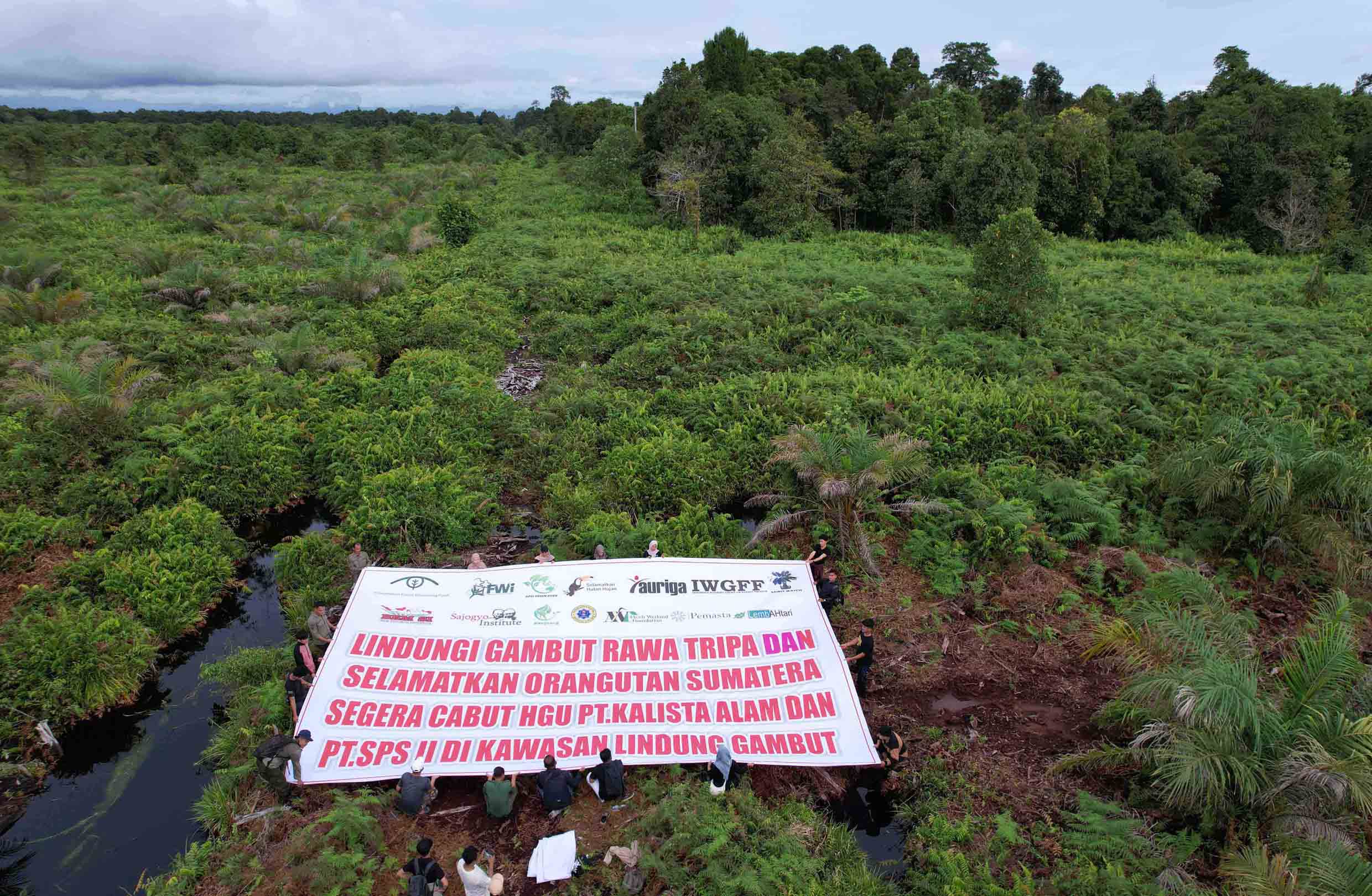
Indonesia actively demonstrates its commitment to global biodiversity conservation through its participation in various international agreements and treaties. One clear manifestation of this commitment is the ratification of the Convention on Biological Diversity (CBD), which binds Indonesia to protect its biodiversity from exploitation and destruction. Furthermore, Indonesia has formulated the Indonesian Biodiversity Strategy and Action Plan 2025–2045 (IBSAP) as a national roadmap for implementing the CBD's objectives. The IBSAP encompasses various strategies and concrete actions to protect ecosystems, preserve species, and utilize natural resources sustainably.
Indonesia's active participation in the international biodiversity conservation agenda underscores its crucial role in global efforts to safeguard life on Earth. However, this commitment must be matched with consistent implementation at the national level so that biodiversity conservation goals can be achieved optimally. This commitment positions Indonesia as a key actor in global endeavors to protect biodiversity and preserve natural resources.
Yet, behind this commitment lies a stark irony: major challenges remain in implementing conservation across Indonesia. Realities on the ground reveal severe conflicts of interest. To date, the forest area regime has proven incapable of halting the rate of natural resource and biodiversity degradation in Indonesia. Records from Forest Watch Indonesia (FWI, 2024) show that 90% of natural resource destruction in the form of natural forests occurs outside conservation areas—specifically within Protection Forests, Limited Production Forests, Permanent Production Forests, Convertible Production Forests, and Other Utilization Areas (APL). This indicates that the threat of biodiversity loss is overwhelmingly present outside formally protected areas.
Data from the Ministry of Environment and Forestry reveals that 6.91 million hectares of land have been released from state forest areas, with 78.39% allocated for oil palm plantations, including bioenergy projects. FWI’s 2024 records indicate that 5.5 million hectares have already been relinquished for palm oil estates. Pressures on biodiversity conservation are compounded by intense commercial interest in forestry-sector natural resources driven by the palm oil industry. The complex regime of Cultivation Rights Titles (Hak Guna Usaha or HGU) is widely seen as a major threat to achieving Indonesia’s biodiversity conservation goals.
FWI data (2024) indicates that across various regions in Indonesia, key biodiversity hotspots overlap with HGU areas. Significantly, 19.16% of total HGU areas (analysis excluding Tanah Papua) fall within Essential Ecosystem Areas (KEE). The regions included in this analysis cover Java, Bali, Nusa Tenggara, Maluku, Sumatra, Sulawesi, and Kalimantan. KEEs encompass vital ecosystems such as mangroves, peatlands, and karst formations—habitats for endangered species—as well as High Conservation Value Areas (HCVA), wildlife corridors, and biodiversity parks designed to protect flora and fauna outside formal conservation zone designations.
This spatial overlap triggers the exploitation of natural resources under the HGU regime. Operational activities of large-scale plantations, such as oil palm, threaten key biodiversity ecosystems. This demonstrates that land governance still faces severe challenges in balancing business interests with nature conservation.
The governance of Cultivation Rights Titles (HGU) reflects poor performance, marked by a lack of transparency and deliberate non-compliance with the law by the Ministry of Agrarian Affairs and Spatial Planning/National Land Agency (ATR/BPN). Public information disputes regarding HGU documents filed by civil society illustrate the Ministry’s reluctance to comply with rulings from the Public Information Commission, the Administrative Court (PTUN), and even the Supreme Court to make HGU documents publicly accessible. This fuels ongoing agrarian conflicts while restricting the rights and access of local and indigenous communities to land information. Consequently, HGUs are issued and operated without public participation, without Free, Prior, and Informed Consent (FPIC / PADIATAPA), and without proper accountability. This exemplifies Bad Governance within Indonesia’s HGU regime, which can spark abuse of authority and corruption in the natural resources sector.
Tripa Peat Swamp: A Biodiversity Hotspot Threatened by the HGU Regime
This grim reality is vividly illustrated in the Tripa Peat Swamp Ecosystem, located in Nagan Raya and Southwest Aceh Regencies, Aceh. Recently, the preservation of Tripa Peat Swamp as a biodiversity hub has been severely threatened by two oil palm plantation companies: PT Kallista Alam and PT Surya Panen Subur II. Both companies damaged the Tripa ecosystem by clearing land through burning to plant oil palm, directly impacting the survival of wildlife, particularly the Sumatran Orangutan and the Sumatran Tiger. Furthermore, both companies degraded the peat swamp’s carbon storage capacity, releasing massive amounts of stored carbon into the atmosphere.
The degradation of the peat ecosystem in Tripa has reached a critical tipping point, with the loss of 608.81 hectares of forest cover due to land-use conversion and illegal encroachment. This condition directly threatens the habitats of the endangered Sumatran Orangutan and Sumatran Tiger. Without swift intervention from the government and law enforcement agencies, the ecosystem’s survival will be further compromised, accelerating an ecological crisis that impacts both biodiversity and local community well-being.
In addition to serving as a crucial habitat for protected wildlife, the Tripa Peat Swamp functions as a regulator of both local and global climates. According to Agus and Wahdini (2008), total carbon stocks stored in Tripa reach 50–100 million metric tons, divided between above-ground (forest) and sub-surface carbon pools. This makes Tripa the largest carbon reserve in Aceh that has not yet been designated as a protected area. Despite its environmental importance, the Tripa region remains legally classified as Other Utilization Area (APL).
Furthermore, as a peatland ecosystem, Tripa plays a crucial role in water cycle regulation and flood prevention. According to Murdiyarso et al. (2004), undisturbed peatlands can store between 0.8 and 0.9 m³ of water per m³. Therefore, preserving Tripa Peat Swamp is essential for maintaining community water supplies and preventing floods. Historically, Tripa also served as a resilient buffer zone during the devastating December 2004 tsunami in Aceh.
The Leuser Ecosystem (KEL) is recognized as one of the most important conservation areas in the world. Spanning 2.6 million hectares, KEL is home to 105 mammal species, 382 bird species, and 95 reptile and amphibian species. It is the last place on Earth of sufficient size and quality to sustain and conserve viable populations of these rare species, and the only place on Earth where four iconic species—the Sumatran Tiger, Sumatran Orangutan, Sumatran Elephant, and Sumatran Rhinoceros—coexist in the wild.
A vital habitat within KEL for these key species, particularly the Sumatran Orangutan and Sumatran Tiger, is located within Tripa Peat Swamp. Tripa is one of three remaining peat swamp forests in Aceh, alongside the Kluet and Singkil Peat Swamps. Of the estimated 6,600 Sumatran Orangutans remaining in the wild, approximately 4% (280 individuals)reside in Tripa (Wich et al., 2008). While exact population data for the Sumatran Tiger in Tripa remains uncertain, the Great Apes Survival Partnership (GRASP)—a joint UNEP and UNESCO initiative implemented by the Indonesian government—has designated Tripa Peat Swamp as a priority conservation area for protected species, particularly the Sumatran Orangutan.
Civil Society Calls for Law Enforcement
Deforestation in the Tripa Peat Swamp forest must be halted immediately, regardless of ongoing legal proceedings. Ongoing UN climate and biodiversity conferences continue to highlight the worsening climate crisis and drastic biodiversity loss. Indonesia must send a clear signal by stopping all destructive activities in this peat swamp, as Tripa is one of the nation's most vital ecosystems. Law enforcement across the forestry, environmental, and plantation sectors in Indonesia must be pursued with far greater seriousness.
In an effort to protect the environment in 2012, the Ministry of Environment (KLH) filed a lawsuit against both oil palm companies for clearing land using fire, causing extensive damage to the Tripa ecosystem. Through Supreme Court Decision No. 1 PK/Pdt/2017 dated April 18, 2017, and Judicial Review (PK) Supreme Court Decision No. 690 PK/Pdt/2018 dated October 17, 2018, both PT Kallista Alam and PT Surya Panen Subur II were found guilty of burning the Tripa Peat Swamp and ordered to pay state compensation.
Despite being legally convicted and ordered to pay damages and restore the degraded Tripa ecosystem, no court execution of these rulings has taken place to this day. PT Surya Panen Subur II and PT Kallista Alam continue to operate normally.
Law enforcement in the forestry, plantation, and environmental sectors must take center stage to protect biodiversity and prevent financial losses to the state. PT KA and PT SPS II must submit to the rule of law and take responsibility for the environmental damage and economic losses they have caused.
Accordingly, the Coalition to Save Tripa Peat Swamp, Orangutan Habitat issues the following official demands:
Urge Nusron Wahid, Minister of Agrarian Affairs and Spatial Planning / Head of BPN: Revoke the HGU permits of PT Kallista Alam (520.78 ha) and PT Surya Panen Subur II (7,565.26 ha). Protect Peatlands, Save Biodiversity!
Urge Raja Juli Antoni, Minister of Forestry: Take immediate and decisive action to save the Tripa Peat Swamp forest.
Urge the Governor of Aceh, Muzakir Manaf, and the Regent of Nagan Raya, Dr. Teuku Raja Keumangan, S.H., M.H.: Immediately elevate the protection status of Tripa Peat Swamp to safeguard its biodiversity.
Urge the Suka Makmue District Court: Immediately execute the court order against PT Kallista Alam (No. 12/Pdt.G/2012/PN/Mbo jo No. 50.PDT/2014/PT.BNA jo No. 651 K/Pdt/2015 jo No. 1 PK/Pdt/2017) regarding the core lawsuit: confiscation of HGU Certificate No. 27 (covering 5,769 ha), environmental restoration of approximately 1,000 hectares of burned land costing IDR 251,765,250,000.00, and ordering the Defendant to pay a daily penalty (dwangsom) of IDR 5,000,000.00 per day for any delay in executing the ruling.
Urge the Suka Makmue District Court: Immediately execute the court order against PT Surya Panen Subur II(No. 700/Pdt.G/2013/PN.Jkt.Sel jo No. 796/PDT/2014/PT DKI jo No. 2905 K/Pdt/2015 jo No. 690 PK/Pdt/2018) regarding material damages amounting to IDR 136,864,142,800.00 payable to the State Treasury, and environmental restoration of approximately 1,200 hectares of burned land costing IDR 302,154,300,000.00 so that the ecosystem can be rehabilitated.
Signed by the Civil Society Network to Save Tripa Peat Swamp for Indonesia's Biodiversity Conservation:
APEL Green Aceh - Indonesia
Rettet den Regenwald e.V. - Germany
Forest Watch Indonesia (FWI) - Indonesia
Independent Forest Monitoring Fund (IFM Fund) – Indonesia
Aceh Wetland Forum - Indonesia
Coalition of Women Protecting the Environment - Indonesia
WALHI South Sulawesi - Indonesia
WALHI East Nusa Tenggara - Indonesia
Mining Advocacy Network Central Sulawesi (JATAM SULTENG) - Indonesia
Environmental Care Association URAI UNI - Indonesia
Save Our Borneo - Indonesia
JPIC Kalimantan - Indonesia
Insan Hutan Indonesia Foundation (YIHUI) - Indonesia
WALHI Central Kalimantan - Indonesia
WALHI Papua - Indonesia
SADIA MUKAH-SARAWAK - Indonesia
CR Aceh - Indonesia
Pissaka Bentala Rakyat Foundation Jakarta - Indonesia
Greenpeace Indonesia
Coalition of People's Water Rights (KAR) - Indonesia
Kaoem Telapak - Indonesia
AJI Jakarta - Indonesia
Kanopi Hijau Indonesia
Sumatra Bright Coalition for Clean Energy - Indonesia
HIMAPA USB YPKP Bandung - Indonesia
Coalition to Save Aceh's Forests and Land - Indonesia
Alam Hutan dan Lingkungan - Indonesia