
Indonesia's forests are the lungs of the world, home to thousands of species, and a source of livelihood for millions of people. However, threats to these forests are increasingly real, ranging from illegal logging and burning to massive encroachment. Amidst these complex issues, objective, transparent, and consistent forest monitoring is key to ensuring forest protection.
The problem is, forest monitoring in Indonesia still faces significant challenges. Currently, there are approximately 30 million hectares of forest covered by 574 utilization permits and 541 industrial units with capacities exceeding 6,000 m3. This is certainly not comparable to the number of monitors, given the limited availability of independent monitors. Consequently, without adequate monitoring, indications of violations are certain to escape public attention, and forest destruction continues unchecked.
Furthermore, the limited number of monitors is another challenge: a lack of funding. This limited funding makes it difficult to achieve monitoring targets and limits the opportunity to conduct detailed monitoring in locations with difficult access and indications of deforestation.
To date, many monitoring initiatives have been carried out voluntarily, relying on the dedication of individuals and communities working with minimal resources. However, voluntary action alone is not enough; collaborative efforts between funding agencies and monitors are needed to ensure that these voluntary actions are not merely sporadic and unsustainable, but rather become a structured, collective movement.
Funding in this context must be free from parties potentially damaging the environment or with vested interests in forestry issues. This is to mitigate risks to the independence and objectivity of monitoring. This is where independent funding and public support are crucial, enabling monitors to work without intimidation, pressure, intervention, and sustainability.
Learning from the IFM Fund's funding achievements
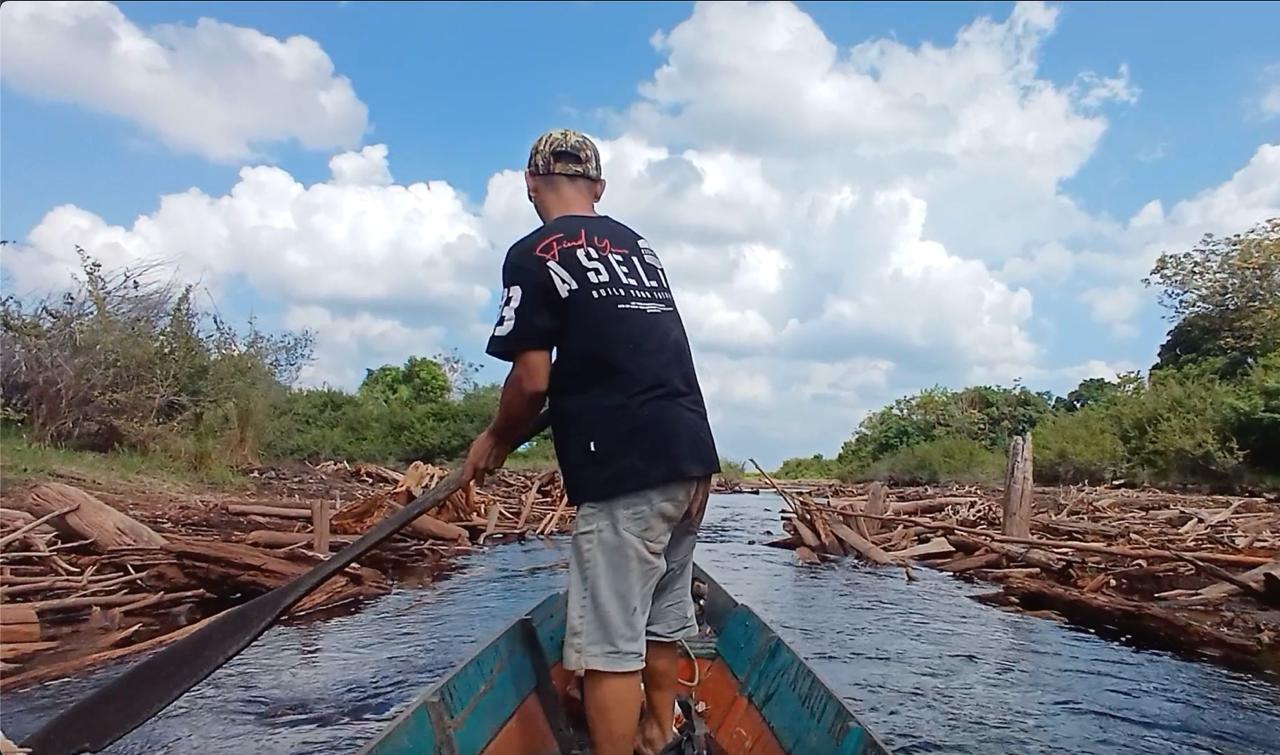
In a village in Kalimantan, residents reported indications of land clearing within a forest concession without proper permits. Responding to these indications, the IFM Fund provided independent funding support to monitors to conduct inspections at the suspected locations. Using simple equipment like cameras, GPS, and field notes, they collected evidence, verified coordinates, and compiled an official report. The results of this investigation were then submitted to the government and published to the public. Several months later, the company in question was obliged to cease its illegal activities.
This story may seem trivial, but it fundamentally demonstrates the monitors' deep dedication to forest sustainability. With independent funding and adequate public support, similar stories would emerge everywhere. Conversely, without it, the journey and investigation would almost certainly not have taken place. It's unlikely that corporate sponsors would fund activities that could expose their own violations. In this case, public support is the only viable option.
Since its inception, the Independent Forest Monitoring Fund (IFM Fund) has been committed to ensuring the sustainability of forest monitoring in Indonesia. The IFM Fund supports independent monitors to oversee forest management permits, ensure management practices comply with regulations, and communicate findings to the public. This consistent approach demonstrates that independent funding can be a crucial pillar in maintaining the integrity of monitoring.
From 2018 to 2024, the IFM Fund has successfully supported 406 Independent Monitors (72% men and 28% women) through various activities such as consolidation, workshops, strategic planning, focus group discussions (FGDs), and small grants for training and implementation of independent monitoring activities. The monitors involved come from 36 civil society organizations, indigenous peoples' organizations, and women's and youth groups spread from Aceh to Papua. The monitoring funds disbursed by the IFM Fund have so far focused on monitoring the forestry sector, addressing a variety of issues, including Forest Utilization Business Permits (PBPH) in natural forests and plantations, Timber Utilization for Non-Forestry Activities (PKKNK), industry, and Land Rights Holders (PHAT).[1]
What Can We Do Together?
The records shown here are still a small part of the various targets that still need to be achieved in the forestry sector. For example, how to place women's groups, local and traditional communities as the main subjects of monitoring by utilizing their knowledge and cultural wisdom to maintain the existence of forests according to their function while also being beneficial for their daily source of livelihood.
Protecting forests is not only the responsibility of those who live nearby but also the responsibility of everyone who cares. Forests provide clean air to breathe, water to drink, and protection from the climate crisis. When we support independent funding for forest monitoring, we are not just looking after the trees, we are looking after life itself. The forest has given everything. Now, it's time for us to stand up for it together, be transparent, and move inclusively and sustainably.
[1] For more on these achievements, see "Independent Monitoring in Achieving Sustainable Forest Governance: Achievements, Lessons Learned, and Future Challenges."