
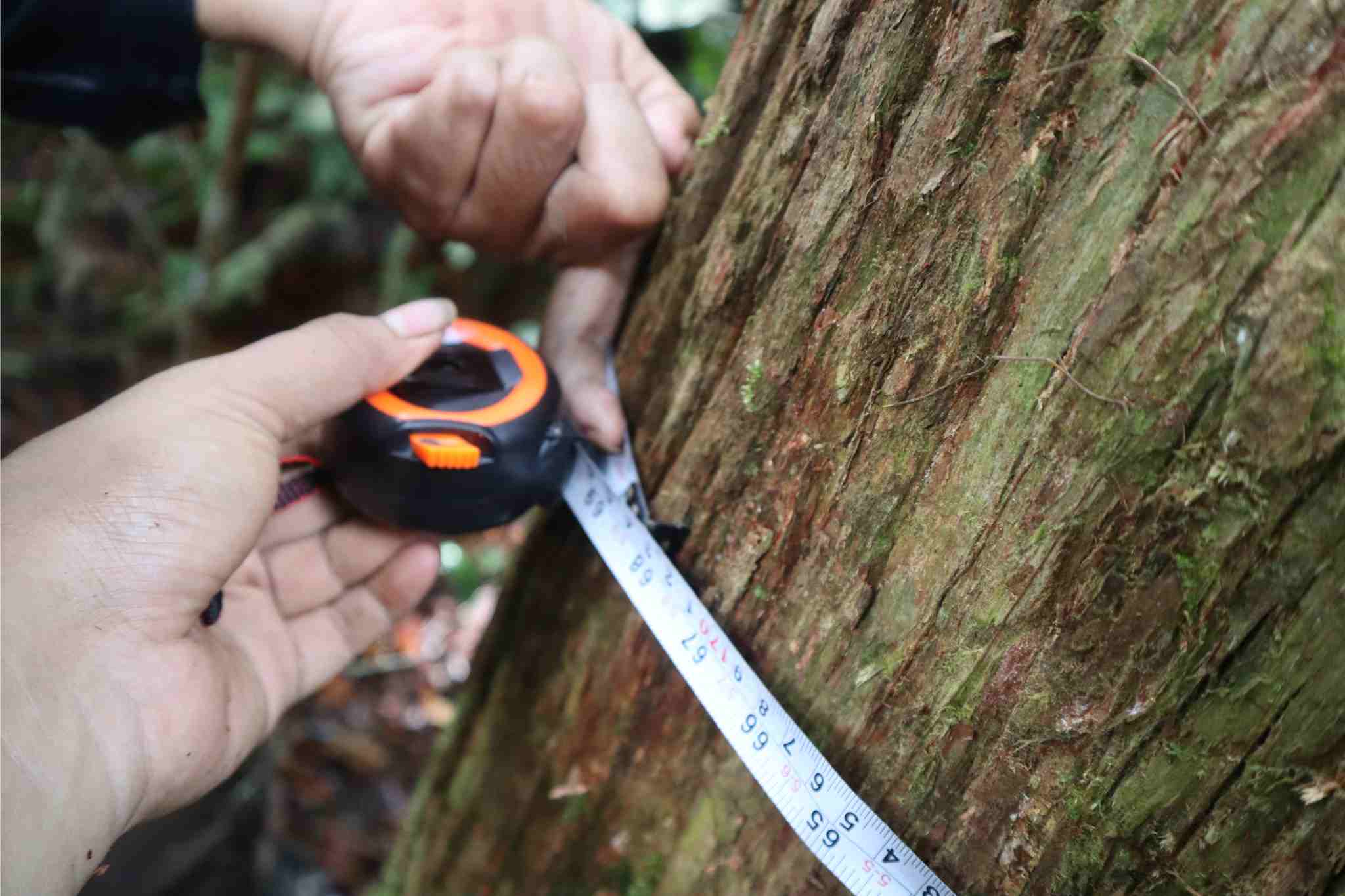
Ramin (Gonystylus bancanus), one of Indonesia’s most valuable native timber species, is now on the brink of extinction due to historical overexploitation and extensive land-use conversion. According to the International Union for Conservation of Nature (IUCN) Red List, the species is classified as Critically Endangered (CR) and is listed under CITES Appendix II, which regulates and restricts its international trade.
Ramin is a forest tree species that can reach a canopy height of 40–45 meters and a diameter of 60–120 cm, characterized by prominent buttress roots. It naturally occurs in lowland forests, swamps, and mixed peat swamp forest ecosystems, showing a particular affinity for deep peatlands ranging from 350–600 cm in depth.
Ecologically, ramin plays a crucial role in maintaining the integrity of peat swamp forests and providing habitat for unique flora and fauna. Tropical peat swamp forests are globally recognized as significant carbon reservoirs. Indonesia’s peatlands alone are estimated to store approximately 55 gigatons of carbon, representing about 56% of the world’s tropical peatland area and 77% of global peat carbon stocks.
As part of efforts to support conservation and mitigation measures, a study applying the Ecological Niche Modelling (ENM) approach, also known as Species Distribution Modelling, was conducted to estimate the geographic distribution and habitat suitability of ramin in Central Kalimantan Province. Based on Hutchinson’s ecological niche concept, the model analyzes species occurrence records in relation to environmental variables such as air temperature, rainfall, and soil physical and chemical characteristics.
Using the Random Forest algorithm, the ENM analysis identified approximately 75,947.40 hectares of potential ramin habitat across Central Kalimantan. The distribution of ramin is fundamentally influenced by hydrological and soil characteristics, particularly its close association with peatlands and preference for areas with lower soil organic carbon content.
However, one of the study’s most alarming findings is that only about 13.7% of the potential habitat lies within protected areas, while approximately 86.3% (or 65,533.15 hectares) is located outside conservation zones, making it highly vulnerable to degradation and land-use change.
Read the full report here: Potential Distribution Assessment of Ramin Trees.